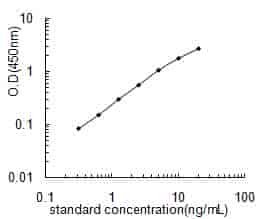
Product Name:Human WD repeat- containing protein 41, WDR41 ELISA KITPacking:96T
Catalog No.:ELI-17493h
Gene Name:WDR41
Detect Range:0.312-20 ng/mL
Sensitivity:0.039ng/mL
Target Protein Name:WD repeat-containing protein 41(WDR41
Alternative Name:WDR41,WD repeat-containing protein 41(WDR41Sample type:serum, plasma, tissue homogenates, cell culture supernates or other biological fluids.
ELISA type:Sandwich ELISA KitProduct Description:Human WD repeat- containing protein 41, WDR41 ELISA KIT allows for the in vitro quantitative determination of WD repeat-containing protein 41(WDR41 concentrations in serum, plasma, tissue homogenates, cell culture supernates or other biological fluids.
ELISA Test Principle:The microtiter plate provided in Human WD repeat- containing protein 41, WDR41 ELISA KIT has been pre-coated with an WD repeat-containing protein 41(WDR41 antibody specific to WD repeat-containing protein 41(WDR41 .Standards or samples are then added to the appropriate microtiter plate wells with a biotin-conjugated antibody preparation specific for WD repeat-containing protein 41(WDR41 and then avidin conjugated to Horseradish Peroxidase (HRP) is added to each microplate well and incubated. Then a TMB substrate solution is added to each well. Only those wells that contain WD repeat-containing protein 41(WDR41, biotin-conjugated antibody and enzyme-conjugated Avidin will exhibit a change in color. The enzyme-substrate reaction is terminated by the addition of a sulphuric acid solution and the color change is measured spectrophotometrically at a wavelength of 450 nm.The concentration of WD repeat-containing protein 41(WDR41 in the samples is then determined by comparing the O.D. of the samples to the standard curve.
NOTE:FOR RESEARCH USE ONLY; NOT FOR THERAPEUTIC OR DIAGNOSTIC APPLICATIONS! PLEASE READ ENTIRE PROCEDURE!
The quality assurance and experimental performance of this biological reagent are rigorously optimized and standardized according to its specific technical pathway: Double Antibody Sandwich Method (双抗体夹心法). This ensures maximum reproducibility across clinical research and scientific workflows.